
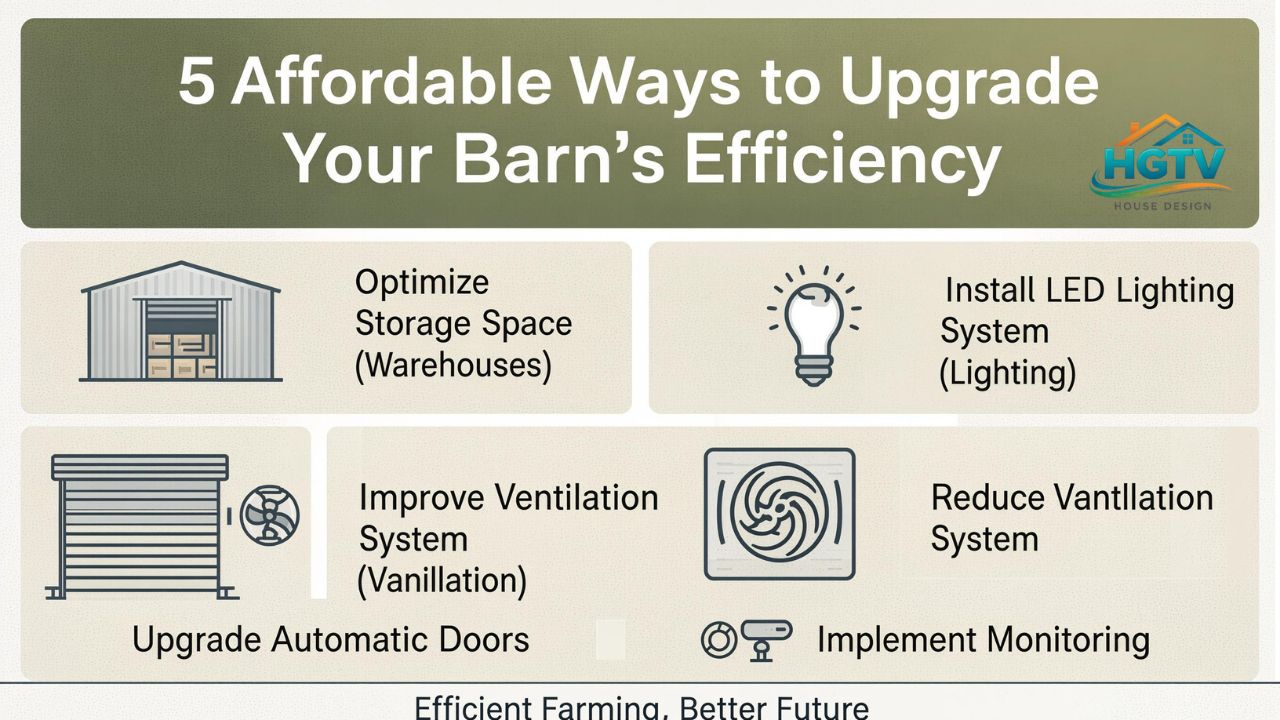
A well-functioning barn is more than just a storage space—it’s the heart of many rural properties, farms, and livestock operations. Whether you use your barn for equipment, animals, or workspace, improving its efficiency can lead to big savings on energy, maintenance, and time. The good news? You don’t need to spend a fortune to see real results.
Here are five affordable and effective ways to boost your barn’s efficiency this year.
Improve Insulation and Air Sealing
Poor insulation is one of the biggest reasons barns lose heat in winter and trap it during summer. Investing in proper insulation doesn’t just maintain a comfortable temperature—it also helps protect animals, equipment, and stored materials from extreme weather.
Start with a professional-grade yet cost-effective option, such as pole barn insulation products from CMI Insulation, designed to deliver excellent temperature regulation while remaining budget-friendly. You can also seal air leaks around windows, doors, and foundation cracks using expanding foam or weatherstripping to prevent drafts and moisture intrusion.
Pro tip: Pay special attention to the roof and corners of your barn—these are the most common places for heat loss.
Maximize Natural Light
Lighting plays a major role in your barn’s daily efficiency. Instead of depending solely on electric lights, let natural light do some of the work. Installing skylights, translucent wall panels, or even solar tubes can flood your barn with daylight and significantly reduce energy costs.
If your barn has windows, keep them clean and unobstructed to let in more light. Reflective paint or light-colored interiors can enhance brightness, reducing your reliance on electrical lighting even more.
Budget-friendly tip: Polycarbonate roof panels or recycled glass windows can provide affordable lighting upgrades without requiring major remodeling.
Upgrade the Ventilation System
Efficient airflow is crucial in maintaining a healthy barn environment. Poor ventilation leads to moisture buildup, musty odors, and respiratory problems for animals. Fortunately, upgrades don’t have to be complicated or expensive.
A simple but effective solution is to install ridge vents, exhaust fans, or cupolas to improve air exchange. Natural ventilation—created through vents placed at different heights—can also help maintain steady airflow and prevent temperature spikes.
For livestock barns, using adjustable shutters or fans with automated temperature sensors can further improve comfort and reduce electricity use. You’ll be surprised at how much cleaner, fresher, and drier your barn feels after improving ventilation.
Invest in Energy-Efficient Lighting
Switching from traditional incandescent or fluorescent bulbs to LED lighting is one of the fastest and cheapest efficiency upgrades you can make. LEDs consume less power, last far longer, and produce brighter, cleaner light—ideal for workspaces and livestock areas.
Look for LED fixtures rated for barns or agricultural environments, as they can withstand dust, humidity, and temperature swings. If your barn uses outdoor lighting, consider installing motion sensors or timers to minimize energy waste during off-hours.
Quick math: Replacing ten 100-watt bulbs with 15-watt LEDs running for four hours daily can save hundreds of dollars per year in electricity.
Optimize Water and Heating Systems
Whether your barn houses livestock or functions as a workshop, efficient water and heating management can lead to major cost savings. Insulated pipes reduce heat loss in winter, while automatic waterers and flow restrictors reduce year-round water use.
If your barn uses heated water or space heaters, consider upgrading to energy-efficient models. Some modern systems use thermostatic controls, allowing you to set precise temperatures without unnecessary waste.
You might also explore renewable options like solar water heaters or radiant floor heating systems, which can deliver comfort and sustainability benefits over time. Even small tweaks, like insulating hot water tanks or installing shut-off valves, can reduce monthly expenses.
Bonus: Keep Up with Routine Maintenance
All the upgrades in the world won’t mean much if your barn falls behind on maintenance. Regular inspections, tightening loose hardware, clearing debris from fans, and checking roof seals all help prevent small issues from turning into expensive repairs. Maintaining clean gutters and ensuring proper drainage around the foundation can also prevent water damage and heat loss. By dedicating just a few hours each season to upkeep, you’ll extend the life of every improvement you’ve made.
Maintenance checklist idea: Create a seasonal barn care list that covers cleaning, repairs, and system checks. This small habit saves both money and stress.
Upgrading your barn’s efficiency doesn’t have to cost a hefty price. By focusing on simple improvements—like better insulation, smarter lighting, proper ventilation, and mindful maintenance—you can create a comfortable, productive, and energy-efficient space that serves your needs for years to come.
The key is taking small, strategic steps now. Each upgrade builds on the next, making your barn not only more functional but also better prepared for the changing seasons.